Sargon of Akkad was a great Mesopotamian king and conqueror, reigning c. 2334-2279 BCE. Though his origins and early life remain obscure, he has long been associated with gardening. The Sumerian King List, dating from the Ur III period (c. 2100 BCE), described Sargon’s father as a gardener or, more precisely, a ‘date grower.’ This biographical tradition (which has not been historically verified) provided the foundation for later stories such as the Neo-Assyrian Birth Legend, written in the late 8th century BCE. In his study of this literary text, Brian Lewis noted that Sargon’s adopted father, ‘Aqqi, the water drawer,’ would have managed a date palm orchard as a tenant farmer, with the young Sargon learning the profession by helping him. He suggested that Sargon’s connection with gardening, which highlighted his humble origins, may have arisen from his participation in Sacred Marriage rites in which the priest-king was identified as a gardener, or from his close association with Inanna/Ishtar, the Lady of the Date Cluster.
Sources: Jacobsen (1939), Lewis (1976), Pritchard (1969), Westenholz (1997).
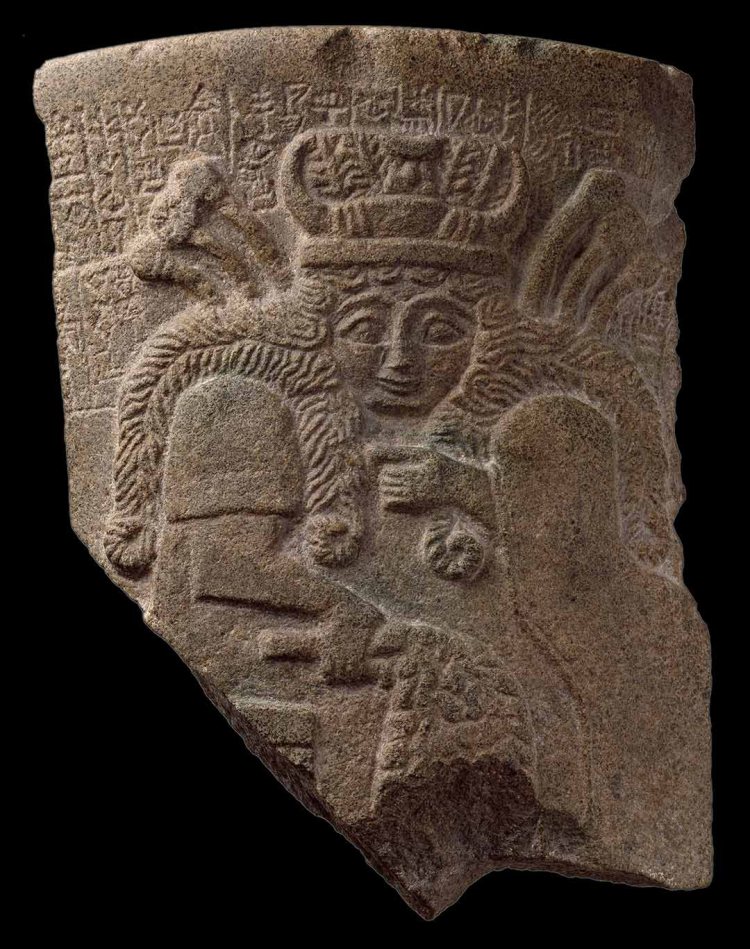
Image: Fragment of a Stone Vessel depicting the Goddess Nisaba or Inanna, with Sumerian Cuneiform Inscription. Southern Iraq, Early Dynastic Period IIIb, c. 2375 BCE. Basalt, 25.1 x 18.6 x 4 cm. Pergamon Museum, Berlin, VA 07248. Photo credit: Staatliche Museen zu Berlin, Vorderasiatisches Museum / Olaf M. Teßmer, CC BY-SA 4.0.
 CLAIRE SULOS